

Description
*Instant digital download. After purchase, you will receive access via the confirmation page and email.
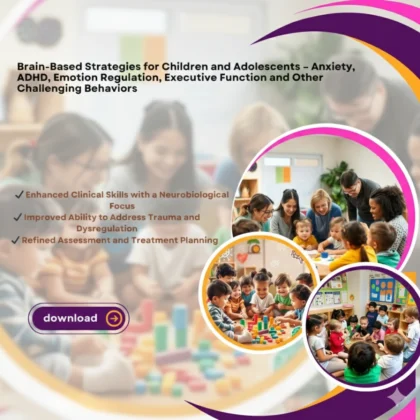
( 1 Video : 3 Hours 11 Minutes • Book : 1 Pdf - Pages : 207 )“When children face challenges, unfamiliar situations, or emotionally demanding moments, their responses can shift toward resistance, avoidance, or emotional shutdown. Instead of engaging with openness and curiosity, children may rely on stress-driven reactions that limit growth, connection, and confidence.
This educational video course introduces a neuroscience-informed, relationship-focused approach designed to help parents, caregivers, educators, and professionals support children in developing emotional strength, flexibility, curiosity, and resilience.
Through clear explanations, practical frameworks, and real-world examples, participants will explore how everyday interactions shape emotional development and influence long-term wellbeing. The course emphasizes creating environments that encourage emotional regulation, empathy, confidence, and healthy coping skills—especially during challenging moments.
Rather than focusing on diagnosis or treatment, this program offers developmentally appropriate strategies that support emotional awareness, self-regulation, and positive engagement in children and adolescents.
⸻
What You’ll Learn
•The core foundations that support emotional balance, resilience, insight, and empathy in children
•How to recognize when children need encouragement to step beyond their comfort zone versus when they need safety and reassurance
•Practical strategies to reduce reactive behaviors such as emotional outbursts, withdrawal, or avoidance
•Ways to promote curiosity, emotional regulation, and positive engagement through everyday interactions
•How relationships, communication, and environment influence emotional and behavioral development
⸻
Learning Objectives
•Understand how brain-based processes relate to emotional regulation and behavior in children
•Apply accessible neuroscience-informed concepts to parenting, education, and support settings
•Integrate emotional awareness, empathy, and self-regulation strategies into daily interactions
•Support children in developing emotional flexibility and adaptive coping skills
•Strengthen connection and trust within parent-child and caregiver-child relationships
⸻
Intended Audience
•Parents and caregivers
•Educators and teachers
•Counselors and mental health professionals
•Social workers and case managers
•Therapists and allied health professionals
•Anyone interested in supporting children’s emotional development
⸻
Important Notice
This product is an independent educational resource inspired by widely recognized neuroscience-informed parenting principles.
It is not affiliated with, endorsed by, or a reproduction of any specific book, author, publisher, or organization.
This content is intended for educational purposes only and does not replace professional medical, psychological, or clinical advice.”











Reviews
There are no reviews yet.